
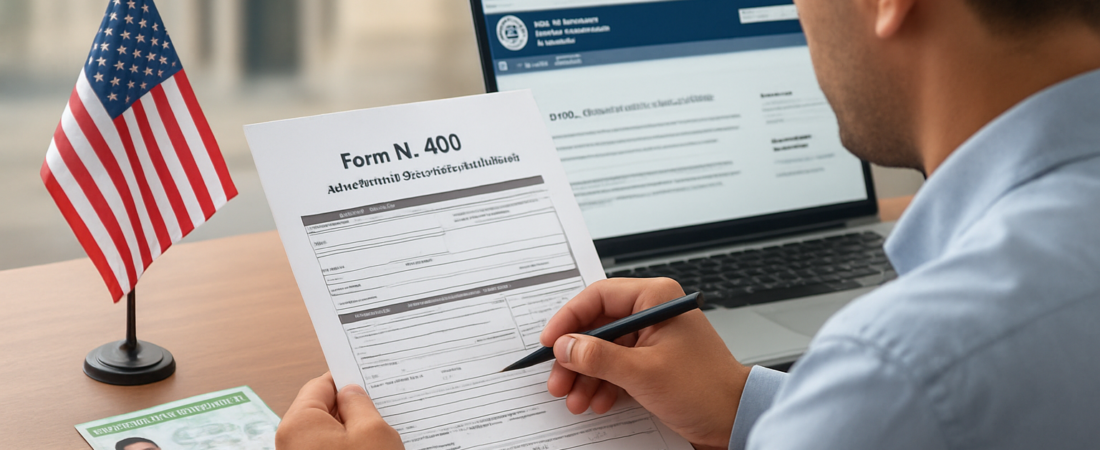
How to Apply for US Citizenship With Form N-400
If you are a lawful permanent resident and ready to become a U.S. citizen, one of the most important steps is filing Form N-400, Application for Naturalization. Many immigrants search for how to apply for us citizenship n-400 because the process can feel overwhelming at first. The good news is that with the right preparation, clear documentation, and an understanding of USCIS requirements, you can move through the naturalization process more confidently.
This guide explains how to apply for us citizenship n-400, who is eligible, what documents you may need, what fees and timelines to expect, how the interview and civics test work, and what mistakes to avoid. It is designed for immigrants and families who want practical, up-to-date information about U.S. citizenship through naturalization.
What Is Form N-400?
Form N-400 is the official application used by lawful permanent residents to apply for U.S. citizenship through naturalization. You file this form with U.S. Citizenship and Immigration Services (USCIS) when you believe you meet the legal requirements to become a citizen.
Naturalization is a major milestone. U.S. citizenship can provide important benefits, including:
- The right to vote in federal elections
- Eligibility for certain government jobs
- A U.S. passport for international travel
- Protection from removal in many situations where permanent residents may still be vulnerable
- The ability to petition certain family members with additional immigration benefits
- Full civic participation and a stronger sense of long-term security in the United States
For many applicants, learning how to apply for us citizenship n-400 is not just about paperwork. It is about securing their future and fully joining American civic life.
Who Can Apply for Naturalization?
Before filing Form N-400, you must make sure you are eligible. While every case is different, many applicants qualify under one of these common paths:
General 5-Year Rule
Most green card holders can apply if they have:
- Been a lawful permanent resident for at least 5 years
- Maintained continuous residence in the United States
- Been physically present in the U.S. for at least 30 months out of those 5 years
- Lived for at least 3 months in the state or USCIS district where they are filing
- Demonstrated good moral character
- Shown attachment to the principles of the U.S. Constitution
- Met English and civics requirements, unless an exception applies
3-Year Rule Through Marriage to a U.S. Citizen
Some applicants can apply after 3 years as a green card holder if they:
- Have lived in marital union with the same U.S. citizen spouse for at least 3 years
- Have held permanent resident status for at least 3 years
- Meet continuous residence and physical presence requirements
- Show good moral character and meet other naturalization requirements
Early Filing Rule
USCIS generally allows applicants to file Form N-400 up to 90 days before they complete the required 3-year or 5-year permanent residence period. This is an important date to calculate carefully. Filing too early can lead to delays or denial.
Why Timing Matters
When researching how to apply for us citizenship n-400, one of the most common issues is timing. Your eligibility date depends on:
- The date on your green card showing when you became a permanent resident
- Your travel history outside the United States
- Your marital history, if applying under the 3-year rule
- Any criminal issues, tax issues, or selective service issues that may affect good moral character
Trips outside the United States can affect continuous residence. In general, a trip of more than 6 months but less than 1 year may disrupt continuous residence unless you can show you did not abandon your U.S. residence. A trip of 1 year or more usually breaks continuous residence for naturalization purposes, unless a narrow exception applies.
How to Apply for US Citizenship N-400: Step-by-Step
1. Confirm Your Eligibility
Before completing the application, review the naturalization requirements carefully. Make sure you qualify under the 5-year rule, 3-year rule, or another applicable category. Review your travel history, criminal history, tax filing record, and family situation. If you have had arrests, long trips abroad, prior immigration violations, or unpaid taxes, it may be wise to speak with a qualified immigration attorney before filing.
2. Gather Your Documents
The exact documents you need depend on your case, but common supporting materials may include:
- A copy of your green card, front and back
- Your state ID or driver’s license
- Passport pages and travel records
- Marriage certificate, divorce decrees, or spouse’s proof of citizenship if applying under the 3-year rule
- Records of legal name changes, if any
- Selective Service registration proof, if required
- Certified court records for any arrests, charges, or convictions
- Tax transcripts or evidence of tax compliance if there are questions about filing history
- Documentation of disability accommodation requests, if applicable
Accuracy matters. Missing or inconsistent documentation can slow down your case.
3. Complete Form N-400 Carefully
Form N-400 asks detailed questions about your identity, residence, work history, travel, family, criminal history, military service, and eligibility. Answer every question truthfully and completely.
Common mistakes include:
- Forgetting to list all trips outside the United States
- Leaving gaps in address or employment history
- Failing to disclose arrests or citations
- Using outdated information
- Signing the form incorrectly or forgetting required sections
If a question does not apply, follow the USCIS instructions for how to respond. Do not guess. If you are unsure, get legal guidance.
4. File Online or by Mail
USCIS allows many applicants to file Form N-400 online through a USCIS online account. Others may file by mail, depending on their situation. Filing online can make it easier to upload evidence, receive notices, and track case updates.
When learning how to apply for us citizenship n-400, always use the official USCIS website and the latest version of the form. USCIS periodically updates forms, instructions, fees, and mailing addresses.
5. Pay the Filing Fee
USCIS filing fees can change, so always confirm the current amount directly with USCIS before submitting your application. In many cases, applicants may need to pay a filing fee and, if required, a biometrics fee. Some applicants may qualify for a reduced fee or fee waiver, depending on current USCIS rules and income eligibility.
Never rely on outdated blog posts or social media comments for fee information. Check the official USCIS fee page before filing.
6. Attend Your Biometrics Appointment
After USCIS accepts your N-400, you may receive a biometrics appointment notice. At this appointment, USCIS collects fingerprints, a photograph, and a signature for background checks. Some applicants may have reused biometrics in certain situations, but you should still watch for official USCIS notices and follow the instructions you receive.
7. Prepare for the Naturalization Interview and Tests
Most applicants must attend a naturalization interview with a USCIS officer. During the interview, the officer will review your Form N-400, ask questions about your background, and test your English and civics knowledge unless you qualify for an exception.
The civics test generally covers U.S. history and government. USCIS provides official study materials, including the list of civics questions. The English test typically includes reading, writing, and speaking components.
You may qualify for an exemption or accommodation if:
- You meet certain age and long-term permanent residence combinations
- You have a qualifying medical disability and submit the proper form and evidence
Bring originals of requested documents to the interview, including your green card, passports, state ID, and any updated records related to your application.
8. Receive a Decision
After the interview, USCIS may:
- Grant your application
- Continue your application for additional evidence or a retest
- Deny your application
If you do not pass one portion of the English or civics test, USCIS usually gives you a second chance to take the failed portion at a later appointment. If USCIS needs more documents, respond by the deadline on the notice.
9. Take the Oath of Allegiance
If USCIS approves your application, the final step is the naturalization ceremony. You become a U.S. citizen only after taking the Oath of Allegiance. At the ceremony, you will usually submit your green card and receive your Certificate of Naturalization.
Review your certificate carefully before leaving the ceremony. If there is a spelling error or other mistake, report it right away.
How Long Does the N-400 Process Take?
Processing times vary by USCIS field office and case complexity. Some cases move faster than others. In general, applicants should expect the process to take several months, and in some locations it may take longer.
Factors that can affect timing include:
- USCIS workload at your local field office
- Whether your application is complete
- Background check delays
- Requests for additional evidence
- Complex travel, tax, or criminal history issues
You can check general case processing times on the official USCIS website, but remember that posted estimates are not guarantees.
Important Issues That Can Affect Approval
Good Moral Character
USCIS reviews whether you have shown good moral character during the statutory period, usually the last 3 or 5 years, depending on your eligibility category. However, older conduct can still matter in some cases.
Issues that may raise concerns include:
- Certain criminal convictions
- Failure to pay taxes or child support
- False statements to immigration officials
- Selective Service problems for some male applicants
- Habitual drunkenness or other conduct affecting moral character findings
Even a minor issue should be reviewed carefully before filing.
Travel Outside the United States
Long or frequent trips can create problems for continuous residence and physical presence. Keep a detailed list of every trip, including departure and return dates. Your passport, airline records, and prior immigration filings can help you reconstruct your travel history.
Taxes
If you were required to file U.S. taxes, make sure you did so properly. Filing as a “nonresident” after becoming a permanent resident can raise serious questions. If you owe taxes, consult a tax professional and consider resolving the issue before filing N-400.
Scam Warnings and Common Pitfalls
Unfortunately, immigrants applying for citizenship are often targeted by scams. If you are searching for how to apply for us citizenship n-400, watch out for these red flags:
- Fake USCIS websites: Only use the official USCIS website for forms, filing instructions, and case updates.
- Notario fraud: In the United States, a “notario” is not the same as a licensed attorney. Some unqualified individuals give harmful legal advice.
- Phone and email scams: USCIS does not usually demand payment by gift card, wire transfer, or cryptocurrency.
- Promises of guaranteed approval: No one can guarantee your citizenship application will be approved.
- Outdated forms or fees: Always confirm you are using the latest version of Form N-400 and current filing fee information.
Another major pitfall is hiding information. Some applicants think an old arrest, long trip, or tax issue will not matter. Failing to disclose a problem can be worse than the problem itself. Honesty is critical.
Practical Tips for a Stronger N-400 Filing
- Calculate your eligibility date carefully. Include the 90-day early filing rule only if you truly qualify.
- Create a travel chart. List every trip abroad with exact dates.
- Review your green card and prior immigration filings. Make sure your information is consistent.
- Check your criminal and traffic history. Get certified court records if anything appears on your record.
- Study early for the civics and English tests. Use official USCIS materials.
- Keep copies of everything you submit. Save your form, evidence, payment confirmation, and notices.
- Update your address with USCIS promptly. Missing a notice can delay or damage your case.
- Get legal help if your case is complicated. This is especially important if you have arrests, long absences, tax issues, prior removal proceedings, or marital complications.
What Happens After You Become a U.S. Citizen?
After naturalization, you can apply for a U.S. passport, register to vote, and update your status with the Social Security Administration and other agencies. If you plan to petition family members, citizenship may open additional immigration options that were not available when you were only a permanent resident.
Keep your Certificate of Naturalization in a safe place. It is an important legal document and can be expensive and time-consuming to replace.
Actionable Takeaways
If you want to understand how to apply for us citizenship n-400, start by confirming your eligibility under the 3-year or 5-year rule, calculating your earliest filing date, and reviewing your travel, tax, and criminal history carefully. Gather your supporting documents, use the latest Form N-400 and USCIS instructions, and prepare thoroughly for the interview and civics test.
Most importantly, avoid shortcuts and scams. File only through official channels, tell the truth on every part of the application, and seek qualified legal guidance if your case has any complications. With careful preparation, Form N-400 can be the path to one of the most meaningful milestones in the U.S. immigration journey: becoming a United States citizen.