
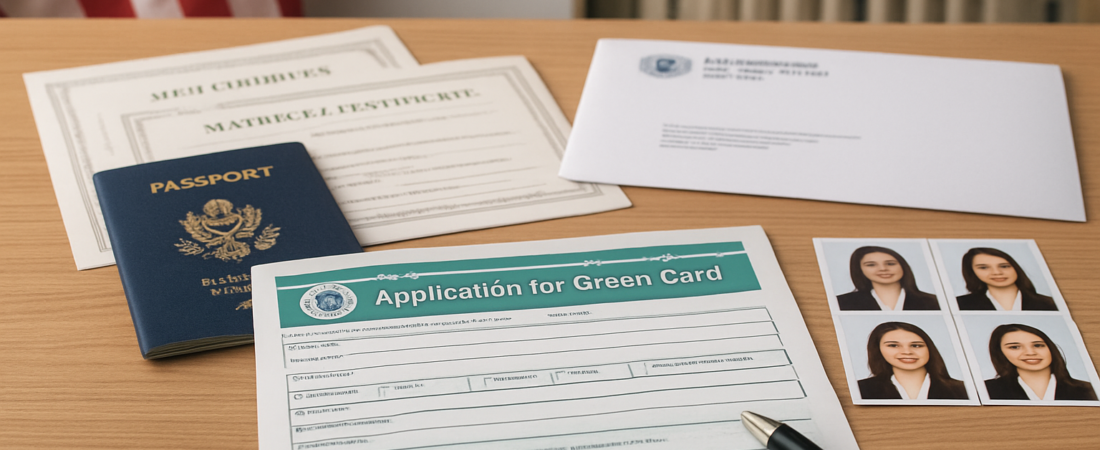
Documents Needed for a Green Card Application: Why the Checklist Matters
If you are applying for lawful permanent residence in the United States, understanding the documents needed for green card application filing is one of the most important parts of the process. Even a strong case can be delayed, rejected, or denied if the supporting evidence is incomplete, inconsistent, untranslated, or filed with the wrong forms.
A green card application is not one single process for everyone. The required evidence depends on how you qualify, whether you are filing inside the United States through adjustment of status or outside the United States through consular processing, and whether your case is based on family, employment, asylum, refugee status, special immigrant categories, or another path. Still, there are core documents that many applicants need in almost every case.
This guide explains the main documents needed for green card application packages, what each document proves, practical filing steps, key dates and numbers to watch, and the most common mistakes that lead to Requests for Evidence (RFEs), delays, and fraud problems.
What a Green Card Application Usually Includes
In many cases, applicants file one or more forms with U.S. Citizenship and Immigration Services (USCIS). A family-based adjustment package, for example, may include Form I-130, Form I-485, Form I-864, Form I-693, and optional forms such as Form I-765 and Form I-131. Employment-based cases may involve an immigrant petition such as Form I-140 and then Form I-485 if a visa number is available.
The exact forms are important, but the evidence behind them is just as important. USCIS and, in consular cases, the National Visa Center (NVC) and the U.S. consulate, use your documents to confirm:
- Your identity
- Your date and place of birth
- Your lawful entry or immigration history, if required
- Your relationship to the petitioner, if applicable
- Your eligibility under the category you selected
- Your financial sponsorship, if required
- Your medical admissibility
- Your criminal and security background disclosures
Core Documents Needed for Green Card Application Cases
Below is a general checklist of the documents needed for green card application filings. Not every item applies to every case, but many applicants will need most of the following.
1. Government-Issued Identity Documents
- Passport biographic page
- Current passport and expired passports, if they show travel or immigration history
- Government-issued photo ID, if available
- Birth certificate issued by the proper civil authority
Your birth certificate should typically show your full name, date of birth, place of birth, and parents’ names. If your country does not issue standard birth certificates, you may need secondary evidence and a certificate of non-availability based on the U.S. Department of State reciprocity schedule.
2. Passport-Style Photos
Many filings require recent passport-style photos. USCIS photo requirements can be specific, so use current instructions for size, background, and format. Photos that do not meet the technical requirements can cause avoidable delays.
3. Proof of Lawful Entry or Immigration Status
- Form I-94 arrival/departure record
- Entry stamp in passport
- Visa page
- Employment Authorization Document (EAD), if any
- Prior approval notices such as Form I-797
- Copies of prior immigration filings or decisions, if relevant
For many adjustment applicants, proof of inspection and admission or parole is a key part of the case. If you entered without inspection, the analysis can be very different and may require legal review before filing.
4. Marriage, Divorce, and Family Relationship Documents
If your case is family-based, relationship evidence is central to the application. Documents may include:
- Marriage certificate
- Divorce decrees from all prior marriages
- Death certificates of prior spouses, if applicable
- Children’s birth certificates
- Adoption records, if applicable
- Proof of bona fide marriage, such as joint lease, joint bank statements, insurance, photos, and affidavits
For a marriage-based green card, USCIS looks beyond the certificate itself. The agency wants evidence that the marriage is real and not entered into solely for immigration purposes.
5. Financial Sponsorship Documents
Most family-based green card applicants, and some employment-based applicants, need an Affidavit of Support on Form I-864. Supporting evidence often includes:
- Most recent federal tax return
- W-2s and 1099s, if available
- IRS tax transcripts
- Recent pay stubs
- Employment verification letter
- Proof of U.S. citizenship or lawful permanent residence of the sponsor
- Joint sponsor documents, if the petitioner’s income is not enough
The income threshold is usually tied to the Federal Poverty Guidelines. In many cases, the sponsor must show income of at least 125% of the federal poverty level, though some exceptions apply, such as for active-duty military petitioners sponsoring a spouse or child.
6. Medical Examination
Most adjustment applicants need Form I-693, Report of Immigration Medical Examination and Vaccination Record, completed by a USCIS-designated civil surgeon. For consular processing, the medical exam is completed through an authorized panel physician abroad.
Medical exam rules and validity periods can change, so applicants should always review the latest USCIS guidance before deciding when to complete the exam. Filing too early can sometimes create timing problems if the medical expires before adjudication.
7. Court and Police Records, If Applicable
If you have ever been arrested, charged, cited, or convicted, do not assume the incident is too minor to matter. You may need:
- Certified court dispositions
- Police reports, if available or required
- Proof of case dismissal, completion of probation, or expungement documents
Failure to disclose criminal history can be more damaging than the underlying incident. Immigration consequences often depend on the exact statute, sentence, and disposition.
8. Certified English Translations
Any document not in English generally must be accompanied by a full English translation and a translator’s certification that the translation is complete and accurate and that the translator is competent to translate.
Do not submit partial translations unless specifically allowed. Missing pages or informal summaries can trigger RFEs.
Category-Specific Green Card Evidence
Family-Based Cases
Typical documents needed for green card application filings in family-based cases include:
- Proof of petitioner’s status: U.S. passport, naturalization certificate, birth certificate, or green card copy
- Proof of qualifying relationship
- Form I-130 petition evidence
- Form I-485 supporting documents
- Affidavit of Support package
- Marriage bona fides evidence for spouse cases
Immediate relatives of U.S. citizens, such as spouses, unmarried children under 21, and parents of adult U.S. citizens, usually do not wait for a visa number. Other family categories often depend on the Visa Bulletin and priority dates.
Employment-Based Cases
- Form I-140 approval or concurrent filing package, if allowed
- Labor certification approval, if required
- Job offer letter or employer support letter
- Educational degrees and transcripts
- Professional licenses
- Experience letters from prior employers
- Pay records or proof of maintenance of status, where relevant
Employment-based applicants should pay close attention to priority dates and the monthly Department of State Visa Bulletin. A visa number must generally be available before Form I-485 can be filed, unless a specific category allows current filing at that time.
Asylees, Refugees, and Other Special Categories
Applicants in humanitarian or special immigrant categories may need approval notices, refugee or asylee documentation, or category-specific evidence. While the core identity and civil documents still matter, the eligibility proof differs significantly from family and employment cases.
Adjustment of Status vs. Consular Processing
The documents needed for green card application cases vary depending on whether you apply inside or outside the United States.
Adjustment of Status in the U.S.
Commonly involves filing with USCIS, often including Form I-485 and supporting evidence. Applicants may also submit:
- Form I-765 for work authorization
- Form I-131 for travel permission, if eligible
- Form I-693 medical exam
Applicants should be careful about travel while the case is pending. Leaving the United States without proper authorization can create serious problems in some cases.
Consular Processing Abroad
After petition approval, many applicants submit civil and financial documents to the NVC and then attend an immigrant visa interview at a U.S. embassy or consulate. Common items include:
- Passport valid for travel
- Birth certificate
- Marriage and divorce records
- Police certificates, where required
- Financial sponsorship documents
- Immigrant visa interview appointment materials
Consular processing requirements can be highly country-specific, especially for police certificates and civil records.
Practical Step-by-Step Filing Guidance
-
Identify your green card category. Before collecting documents, confirm whether your case is family-based, employment-based, humanitarian, or another category. Your checklist depends on this first step.
-
Review the latest USCIS form instructions. USCIS periodically updates forms, filing addresses, fees, and evidentiary rules. Always use the newest official instructions before mailing anything.
-
Create a document folder by topic. Separate identity records, immigration records, relationship evidence, financial evidence, and translations. This makes it easier to prepare a complete filing.
-
Check names and dates for consistency. If your name is spelled differently across documents, include evidence of the variation, such as a legal name change record or an explanatory statement with supporting proof.
-
Obtain certified translations. Do not wait until the last minute. Translation delays are common and can postpone filing.
-
Make legible copies. Unless specifically required, USCIS often asks for copies at filing and may request originals later. Keep complete copies of everything you submit.
-
Track deadlines and priority dates. If your category is subject to annual limits, monitor the Visa Bulletin monthly. If USCIS issues an RFE, respond by the exact deadline listed on the notice.
-
Prepare for biometrics and interviews. After filing, USCIS may schedule a biometrics appointment and, in many cases, an interview. Bring originals of key civil documents when instructed.
Key Dates and Numbers to Know
Green card applicants should pay attention to several important numbers and timing issues:
- Priority date: The place-holder date that determines when an immigrant visa may become available in preference categories.
- Visa Bulletin: Published monthly by the U.S. Department of State and used to track visa availability.
- Form edition dates: USCIS only accepts certain editions of each form.
- RFE deadlines: Missing the response deadline can lead to denial.
- Medical exam validity: Timing matters, so check current USCIS rules before submitting Form I-693.
- Passport validity: For consular processing, a passport usually must be valid for the required travel period.
Because filing fees and processing times change, it is wise to verify them directly on official government websites before filing.
Common Mistakes That Delay Green Card Cases
- Submitting the wrong form edition
- Forgetting to sign forms
- Using inconsistent addresses or names across forms
- Missing pages of tax returns or civil documents
- Failing to include translation certifications
- Sending poor-quality copies that are hard to read
- Assuming one checklist fits every immigration category
- Not disclosing prior immigration violations or arrests
- Including insufficient proof of a bona fide marriage
- Relying on outdated online advice instead of current USCIS instructions
Even small clerical errors can cause rejection at intake or create months of delay later.
Scam Warnings and Fraud Red Flags
High-intent applicants searching for the documents needed for green card application process are often targeted by scammers. Be cautious if someone:
- Guarantees approval
- Claims to have a special connection inside USCIS
- Asks you to sign blank forms
- Refuses to give you copies of your filing
- Demands payment only in cash or through unusual transfer methods
- Uses fake government-looking websites or social media accounts
- Tells you to lie about your entry, marriage, work history, or criminal record
Only rely on official sources such as USCIS, the Department of State, and reputable legal help. In the United States, notaries are generally not attorneys unless they are also licensed lawyers. Confusion about the word “notario” has led many immigrants into serious filing mistakes and fraud.
When to Get Professional Help
Some green card applications are straightforward, but others involve legal issues that deserve individualized review. Consider professional guidance if your case includes:
- Unlawful presence concerns
- Entry without inspection
- Prior removal or deportation proceedings
- Criminal history
- Prior immigration fraud findings or misrepresentation concerns
- Multiple marriages or complex family history
- Public charge or financial sponsorship complications
- Prior denials or RFEs
The right legal strategy can matter just as much as the documents themselves.
Actionable Takeaways
The documents needed for green card application filings depend on your category, but every applicant should start with a disciplined checklist. Gather identity documents, civil records, immigration history, category-specific proof, financial sponsorship records, translations, and medical documentation where required. Review every form for signatures, consistency, and current edition dates before filing.
- Confirm your eligibility category first
- Use the latest USCIS and Department of State instructions
- Organize documents by section and keep full copies
- Check names, dates, and translations carefully
- Monitor priority dates, RFEs, and appointment notices
- Avoid scams, fake promises, and anyone asking you to hide facts
A complete and well-organized package can reduce stress, lower the risk of delays, and put your case in the best position for review. If your history includes complications, getting qualified immigration guidance before filing can help you avoid costly mistakes.