
5 Costly Mistakes to Avoid When Renewing Your Green Card in 2026
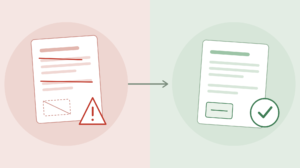
Renewing a green card sounds simple on paper: fill out Form I-90, send it in, wait for the new card. In practice, it’s one of the easiest USCIS filings to get wrong — and a rejected or delayed I-90 can leave you without valid proof of your lawful permanent resident status for months. If you’re working with an immigration consultant rather than an attorney, there are a few extra wrinkles you need to understand before you file.
Below are the mistakes we see most often, and how to avoid them.
Mistake #1: Assuming Your Consultant Can File the I-90 Online for You
Starting in May 2026, USCIS has been steering applicants toward filing Form I-90 online through a myUSCIS account. Online filing is faster to submit, gives you real-time status tracking, and — critically — it’s cheaper, at $415 versus $465 for a paper filing.
Here’s the catch: if you’re not filing this yourself, the person helping you prepare the form matters. USCIS online representative accounts that allow someone to file and manage an application on a client’s behalf are built for attorneys and accredited representatives, who can create an online account that lets them manage all of their clients’ applications in one place. An immigration consultant is neither an attorney nor a Department of Justice–accredited representative, which means a consultant cannot submit your I-90 through the online portal on your behalf.
This is a mistake we see constantly: a client assumes their consultant can “just do it online like everyone else,” gets partway through the process, and only then discovers the application has to go out by mail instead. If you’re working with a consultant, plan for paper filing from the outset — it saves you a scramble later.
To be clear, this doesn’t mean paper filing is a downgrade. It just means a few extra forms and a bit more care with your mailing package. That brings us to the next mistake.
Mistake #2: Forgetting the Companion Forms That Make a Mailed Application Work
A paper I-90 isn’t just the I-90 form by itself. Two small supplemental forms matter a great deal when you’re filing by mail:
Form G-1450 authorizes USCIS to charge your filing fee to a credit, debit, or prepaid card. This form has become essential rather than optional: since October 28, 2025, USCIS no longer accepts paper checks or money orders, so every mailed application now needs either Form G-1450 or the newer Form G-1650 for ACH bank payment. If you mail your I-90 without a valid payment form attached, USCIS won’t process it as incomplete — a declined or missing G-1450 doesn’t just fail quietly; it causes USCIS to reject the entire application package and send everything back. That means starting your renewal clock all over again.
Form G-1145 is the e-Notification request. It’s free, it’s one page, and it’s easy to skip because it feels optional. It is optional — but skipping it means you’ll have no idea your application has been received until the paper receipt notice arrives by mail, which can take a couple of weeks. Attaching Form G-1145 to the first page of your application lets USCIS send you a text or email as soon as they accept it at the Lockbox facility, so you’re not left wondering whether your envelope actually arrived. For a renewal where timing already matters, that peace of mind is worth the extra minute it takes to fill out.
The takeaway: every paper I-90 package should include the I-90 itself, G-1450 for payment, and G-1145 for tracking — clipped together in that order, on top of your supporting documents.
Mistake #3: Getting the Supporting Documents Wrong
This is where we see the most confusion, and it usually goes one of two ways: people attach too little, or they attach things USCIS never asked for.
What you should include:
- A copy of your current (or most recently expired) green card
- A copy of your passport’s biographic page
- If your passport isn’t in English, a certified translation of it
The certified translation matters more than people expect. USCIS won’t accept a document in a foreign language without an English translation, and that translation needs to be certified — meaning the translator attests, in writing, that it’s complete and accurate and that they’re competent to translate between the two languages. A translation you did yourself, or a rough Google Translate printout, isn’t going to satisfy that requirement and can get your application flagged for missing evidence.
What you don’t need: a birth certificate. This trips people up because so many other immigration filings do require one. For a standard I-90 renewal, your green card and passport already establish your identity and status — USCIS isn’t asking you to re-prove where or when you were born. Sending one anyway won’t get your application rejected, but it’s unnecessary paperwork, and for consultants juggling multiple client files, it’s one more document to lose track of.
If your filing reason is something other than a straightforward renewal — a name change, a lost or stolen card, biographic correction — the document list changes, and you’ll need additional evidence like a marriage certificate or court order. But for the routine “my 10-year card is expiring” scenario, keep the package lean: I-90, G-1450, G-1145, green card copy, passport copy, certified translation if needed.
Mistake #4: Sending It to the Wrong Address
USCIS lockbox addresses for Form I-90 are specific, and they occasionally change. Using an old address, a general USCIS office address, or an address you found on a third-party website that hasn’t been updated can send your application into limbo — or straight back to you.
The standard mailing address for Form I-90 is: USCIS Attn: I-90 (Box 21262), 2108 E. Elliot Rd., Tempe, AZ 85284-1806. If you’re using an express or courier service rather than regular USPS mail, the physical delivery address is different from the P.O. box, so double-check which one applies to your shipping method before you send anything.
Because these addresses do shift periodically, the safest habit — and one we follow with every client — is to verify the current filing address directly on the official USCIS I-90 page immediately before mailing, rather than relying on memory or an old printout. A five-minute check can save you weeks of delay.
Mistake #5: Panicking If the Application Comes Back After Your Card Expires
This is the scenario that causes the most stress, and understandably so: your green card expires, your I-90 gets rejected — maybe over a payment issue, a missing signature, or a document problem — and now you’re staring at an expired green card with no application in USCIS’s system.
Take a breath. This is fixable, and it’s more common than people realize.
Refile immediately. A rejection isn’t a denial, and it doesn’t affect your underlying permanent resident status. Your status as a lawful permanent resident doesn’t expire just because the physical card does — the card is evidence of your status, not the status itself. Correct whatever caused the rejection and get the corrected package back in the mail as soon as possible.
Ask for temporary proof of status while you wait. If you need to show proof of your lawful permanent resident status for work, travel, or another purpose while your corrected I-90 is pending, you can request an ADIT stamp (also called an I-551 stamp) at a local USCIS field office. This is typically done by scheduling an appointment, bringing your passport and any prior USCIS receipt notice, and having the stamp placed in your passport the same day as temporary evidence of your status.
It’s also worth noting that once your I-90 is properly filed and accepted, the resulting receipt notice generally extends the validity of your existing card for a set period, so many renewal applicants never need to worry about a true documentation gap in the first place — as long as the application goes in before things drag out too long.
The Bottom Line
Most I-90 rejections and delays don’t come from complicated legal issues — they come from small, avoidable process mistakes: assuming online filing is available when it isn’t, missing a payment form, attaching the wrong documents, mailing to an outdated address, or not knowing what to do if something comes back. None of these are things to panic over, but all of them are things worth getting right the first time.
If you’re navigating a green card renewal and want a second set of eyes on your paperwork before it goes in the mail, that’s exactly the kind of review we help clients with every day.